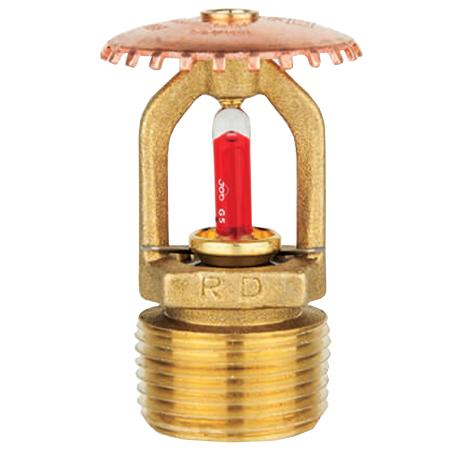
An Upright Sprinkler is one of the most dependable devices in commercial and industrial fire protection, yet many building owners know little about it. If you run a warehouse, factory, workshop, or parking facility, understanding this device helps you protect people, stock, and equipment with more confidence.
This guide explains what it is, how it works, where it fits best, which specifications matter, and how to install and maintain it. You will also see real fire-safety statistics, two comparison tables, and clear answers to common buyer questions.
welltechtrade prepared this article in plain language so that engineers, facility managers, and first-time buyers can all follow it.
What Is an Upright Sprinkler and How Does It Work?
Every automatic sprinkler has the same job: sense heat and release water. What changes from one model to another is the direction the head faces. An upright model is mounted on top of the branch line pipe, with its frame and deflector pointing up.
When heat reaches the glass bulb or fusible link, it breaks or melts. Water then shoots upward from the orifice, hits the deflector, and falls back down in a rounded spray that covers the floor and stock below.
Think of holding your palm above a garden hose. The jet hits your hand and rains down around you. The same idea works here, only on a far more controlled and tested scale.
This head is not simply a pendent head turned upside down. The deflector shape, frame design, and approvals are different, and the product is listed for upward installation only. An upright head hung from ceiling pipes is easy to spot by its concave deflector, and it counts as a fire hazard and a code violation.
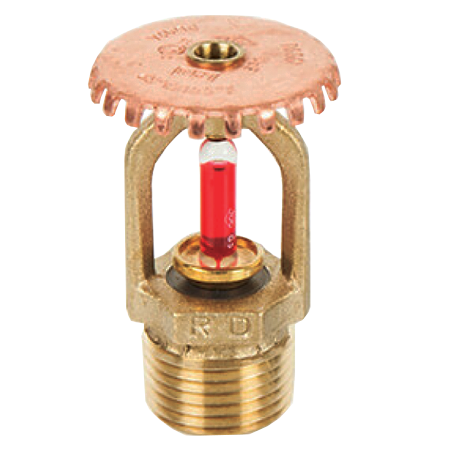
Where Is an Upright Sprinkler Commonly Used?
These heads are popular in spaces with exposed pipework and no finished ceiling. Pipes run along beams or under the roof deck, so the heads simply sit on top of them. That layout saves material and keeps installation simple.
Another reason is water quality. Sediment and scale settle at the bottom of a pipe, so an outlet on top is less likely to clog than one that hangs below.
Typical locations include:
- Warehouses and distribution centers
- Factories and manufacturing floors
- Parking structures and loading docks
- Workshops with exposed ceilings
- Unheated or cold-storage areas served by dry-pipe systems
Dry-pipe systems deserve a special mention. Water stays behind a closed valve until a fire occurs, so a pendent head hanging below the pipe can trap water after a trip. Heads placed on top of the pipe drain more easily, which is why designers often favor them in cold areas.
Why Fire Sprinklers Matter: Key Statistics
Fire sprinklers have decades of real data behind them. The National Fire Protection Association (NFPA) reviewed U.S. fires reported between 2005 and 2009 and published clear results:
- In homes with wet-pipe sprinklers, the death rate per fire was 83% lower. mtnbrook
- Direct property damage per home fire was 71% lower. mtnbrook
- Sprinklers operated in 91% of fires that were large enough to activate them, and they were effective 96% of the time once they operated.
- When wet-pipe sprinklers operated, 88% of fires needed only one or two heads. mtnbrook
These numbers cover sprinklers in general, not one specific head type. Still, they show why correct selection and installation matter. An earlier NFPA report hosted by the NIST fire research library found that sprinklers cut the chance of dying in a fire by one-half to three-fourths and reduced average property loss by one-half to two-thirds.
Choosing the Right Sprinkler Type
The right choice depends on your ceiling, pipe layout, and hazard level. A quick comparison makes the difference easier to see.
prinkler vs Pendent Sprinkler
| Feature | Upright Head | Pendent Head |
| Mounting | On top of the pipe | Hangs below the pipe |
| Deflector position | Above the orifice | Below the orifice |
| Appearance | Exposed, industrial look | Exposed or hidden behind a cover plate |
| Best for | Exposed pipework, industrial areas | Finished ceilings, offices, shops |
| Dry-pipe use | Usually preferred | Needs special dry-type design |
| Debris clogging risk | Lower | Higher |
Upright SNeither type is better in every case. The space, the pipe layout, and the local code decide which one fits.
Other Types Worth Knowing
Sidewall heads suit corridors and rooms where ceiling pipework is impractical, while concealed heads hide behind a cover plate for a cleaner look. A technical guide from QRFS explains that traditional fire sprinklers fall into four basic types: pendent, upright, sidewall, and concealed.
Key Specifications to Check Before Buying
Before you buy an Upright Sprinkler, confirm these details with your fire protection designer.
| Specification | What It Means | Common Examples |
| K-factor | How much water flows at a given pressure | 5.6 standard, 8.0 large orifice |
| Temperature rating | Heat level that triggers the head | 57°C orange, 68°C red, 79°C yellow, 93°C green |
| Response type | Speed of activation | Standard or quick response |
| Finish | Protection against corrosion | Brass, chrome, wax or PTFE coating |
| Thread size | Connection to the pipe | 1/2 inch or 3/4 inch |
| Approvals | Proof of independent testing | UL, FM, VdS |
Choose a temperature rating that sits safely above the highest ambient heat near the head. Spots near heaters, skylights, and roof decks need extra care, because a rating that is too low can cause false activation.
Coverage area matters too. Under NFPA 13, standard-spray heads in ordinary-hazard areas typically cover up to 130 square feet (about 12 square meters). In light-hazard areas, the limit is up to 225 square feet (about 21 square meters). Your designer will confirm exact figures for your building.
Installation and Maintenance Best Practices
A sprinkler is only as good as its installation. Start with a design prepared by a qualified fire protection engineer who follows NFPA 13, the standard for installing sprinkler systems, or the equivalent local code.
Installation Tips
- Install the head with the frame pointing up, exactly as listed
- Use only the correct sprinkler wrench on the wrench flats, never on the frame or deflector
- Apply thread sealant sparingly so it never enters the waterway
- Keep the deflector about 1 to 12 inches (25 to 300 mm) below the ceiling or roof deck, unless the listing says otherwise
- Keep clear space below the deflector, commonly 18 inches (about 46 cm) from stored goods
- Never paint, wrap, or hang objects on the head
Always verify clearances against the current edition of the standard and your local authority.
Inspection and Care
NFPA 25 covers inspection, testing, and maintenance of water-based systems. Walk the building regularly and check for corrosion, leaks, paint, damage, and blocked heads. Replace any head that is damaged, even slightly. Under NFPA 25, standard-response heads are generally sampled or replaced at 50 years, and fast-response heads at 20 years.
In dusty or corrosive spaces, choose protective coatings. Add guards where forklifts or cranes could strike the heads.
Common Mistakes to Avoid
Wrong orientation. Installing a head in a position it is not listed for changes how water spreads. Always match the product label to the installation direction.
Ignoring obstructions. Ducts, lights, and beams can block the spray. Your designer should check these before heads are placed.
Skipping maintenance. Dust, paint, and corrosion quietly reduce performance. Regular checks catch problems early.
Buying on price alone. A cheaper head without proper approvals can cost far more after a failed inspection or a real fire.
How welltechtrade Can Help You Choose
Fire protection catalogs list dozens of K-factors, finishes, and approvals, which can feel confusing. welltechtrade helps buyers narrow the list by starting with the building itself. Share your occupancy type, ceiling height, hazard class, and pipe layout, and the team can suggest a suitable Upright Sprinkler or another head type that matches your project.
Final selection should always be approved by a licensed designer and your local authority. You can also explore related products on our
Frequently Asked Questions
What is an Upright Sprinkler used for?
It protects spaces with exposed pipework, such as warehouses, factories, and parking structures. It sits on top of the branch line and sprays water upward onto a deflector, which spreads it downward over the protected area.
Can I install it facing down?
No. The product is tested and listed for an upward position only. Installing it facing down can change the spray pattern and may violate fire codes.
Is it suitable for dry-pipe systems?
Yes, it is commonly used there. Because the outlet sits on top of the pipe, water drains more easily, which helps in cold areas.
How many heads usually activate in a fire?
Often just one or two. NFPA data shows that 88% of fires involving operating wet-pipe sprinklers needed only one or two heads.
How often should I inspect the heads?
Sprinklers are generally inspected visually at least once a year, while valves and gauges need more frequent checks. Follow NFPA 25 and your local authority for the exact schedule.
Conclusion
An Upright Sprinkler is a simple device with a serious job. Its upward position suits exposed pipework, dry-pipe systems, and industrial spaces where debris and cold are real concerns. Choosing the right K-factor, temperature rating, and finish, then installing and maintaining the head correctly, gives your fire protection system its best chance to work when it matters.
Use the tables and checklists in this guide when you plan your next project, and involve a qualified designer from the start. If you need product guidance, welltechtrade is ready to help you match the right head to your building.