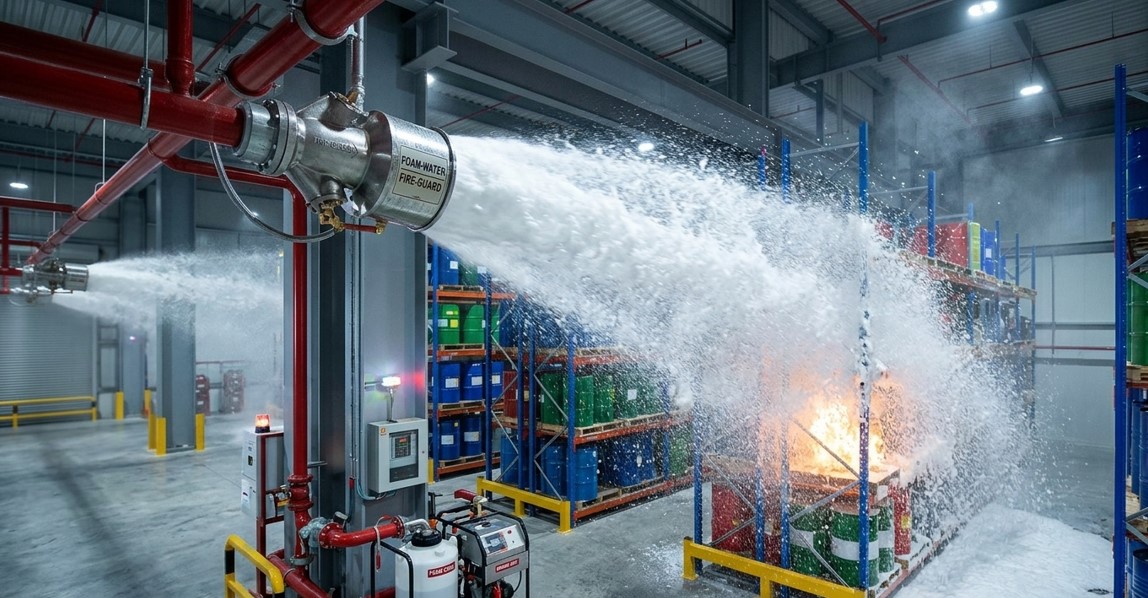
A Foam Water Sprinkler protects areas where flammable liquids can burn, such as fuel storage, paint rooms, and aircraft hangars. It sprays a mix of water and foam concentrate through sprinkler heads, so one system cools the fire and smothers the liquid surface at the same time.
This guide explains how the system works, which parts it needs, where it fits, how foam types are changing, and how to keep it ready. You will also find four comparison tables, simple checklists, and short answers to common buyer questions.
welltechtrade wrote this guide in plain language for plant managers, safety officers, and procurement teams who want a clear picture before they spend money.

What Is a Foam Water Sprinkler and How Does It Work?
Plain water does a poor job on burning fuel. Oil and solvents float on top of it, so the fire can spread along the surface. Foam fixes that. It forms a blanket over the liquid, cuts off oxygen, and traps the vapors that feed the flames.
The system is built on a normal sprinkler layout. Pipes carry water to the heads. A proportioner adds foam concentrate to the flow at a set percentage, usually 1%, 3%, or 6%. The mixed solution leaves the head, lands on the hazard, and spreads into a layer of foam. The water in the mix keeps cooling the surface.
Think of a diesel pump that starts leaking near a hot motor. A fire starts in the puddle. The heads open over the spill, the foam solution covers it, and staff get time to shut down the pump and call for help.
Two layouts are common. Closed-head systems release solution only from heads that the heat opens. Open-head systems, often called deluge, release from every head at once when a detector trips. Open-head layouts suit fast-spreading fires such as fuel spills in a hangar.
Why Choose Foam Over Plain Water for Flammable Liquids?
Water cools a fire, but it does not stop vapors rising from a burning liquid. Foam handles both jobs. It also sits on the surface after the flames drop, which lowers the chance of the liquid reigniting.
Sprinklers as a group have strong results behind them. A fire research report hosted by the NIST fire research library found that where sprinklers were present, the chance of dying in a fire fell by one-half to three-fourths, and average property loss was cut by one-half to two-thirds. Sprinklers failed to operate in only 7% of fires large enough to set them off, and system shut-offs and human error caused nearly all of those failures.
Those numbers cover sprinklers in general, not foam systems alone. They still show why a working, well-kept system matters.
Foam adds these benefits:
- Smothers the liquid surface and traps flammable vapors
- Cools the fuel and nearby structure with the water in the mix
- Blankets spills, which lowers the risk of reignition
- Works automatically, with nobody needing to reach the hazard
- Covers wide floor areas such as hangars and loading bays
- Fits into a standard sprinkler layout that installers already know
| Feature | Standard Water Sprinkler | Foam System |
| Main action | Cooling | Cooling plus smothering |
| Best for | Paper, wood, ordinary combustibles | Flammable and combustible liquids |
| Extra equipment | None | Concentrate, storage tank, proportioner |
| Maintenance | Heads, valves, pipes | Same, plus concentrate checks |
| Runoff | Water only | Water with foam, may need containment |
Key Parts of a Foam System
At first glance, a foam system looks like any sprinkler system. The difference sits at the riser, where the foam equipment joins the water line.
| Component | What It Does |
| Foam concentrate | The liquid that becomes foam when mixed with water |
| Storage tank (often a bladder tank) | Holds the concentrate; water pressure pushes it out |
| Proportioner | Adds the right amount of concentrate to the water flow |
| Control valve | Releases water when a head opens or a detector trips |
| Sprinklers or nozzles | Spread the solution over the protected area |
| Detection and alarm | Sense the fire, sound the alarm, and start the system |
| Fire department connection | Lets responders add water to the system |
Each part is tested to work with the others. Swapping one item without checking its listing can change how much foam reaches the fire.
Where Is a Foam Water Sprinkler Used?
Foam systems belong wherever a flammable liquid can spill, leak, or spray. Picture a paint shop with solvent drums stacked near a mixing area. Water alone would spread the burning liquid, while foam holds it in place.
Typical locations include:
- Fuel storage and handling areas
- Aircraft hangars and maintenance zones
- Paint spray areas
- Chemical plants and refineries
- Warehouses that store flammable liquids
- Loading, transfer, and pump areas
- Marine and offshore facilities
Your insurer and local fire authority often decide whether a site needs foam. Ask them early, because their answer shapes the whole design.
Foam Types: AFFF, Alcohol-Resistant, and Fluorine-Free
The foam you choose matters as much as the heads. For decades, aqueous film-forming foam (AFFF) was the standard. It forms a thin film over fuel, and it contains PFAS, often called “forever chemicals” because they do not break down easily.
Rules are now tightening. The Government Accountability Office reported in 2024 that the U.S. Department of Defense used AFFF at about 1,500 facilities and in more than 6,800 mobile assets. A federal law required it to stop using AFFF at its installations after October 1, 2024, with waivers possible until October 1, 2026. Early cost estimates for the switch passed $2.1 billion.
Industry is moving too. Marsh notes that Australia, Canada, Japan, and the U.S. are restricting certain AFFF products. From January 2026, ships may no longer use or carry foams containing PFOS, a type of PFAS, and as many as 40,000 vessels may be affected.
Whichever foam you pick, a Foam Water Sprinkler design has to be built around it, because the proportioner and heads are tested with specific concentrates.
| Foam Type | How It Works | Points to Know |
| AFFF | Forms a film over the fuel | Contains PFAS; being phased out in many places |
| Alcohol-resistant foam | Forms a protective layer on alcohol and similar liquids | Needed where fuels mix with water |
| Fluorine-free foam (FFF) | Forms a bubble barrier that traps vapors | Generally less toxic; needs gentle application |
Fluorine-free foams are not always drop-in replacements. Marsh points out that some are thicker than AFFF, so the proportioning equipment may need changes. Shelf life can also shift with storage temperature, and crews need training on the new foam.
Design Basics and Standards
NFPA 16 is the main installation standard for these systems, and you can find it through the NFPA 16 listing at ANSI. A commonly cited minimum design density is 0.16 gallons per minute per square foot (about 6.5 liters per minute per square meter). Exact values depend on the hazard, the foam maker’s listing, and your local authority, so treat the figure as a starting point, not a final design.
| Design Input | Why It Matters |
| Hazard type | Hydrocarbons and alcohols need different foams |
| Foam concentrate | Must match the hazard, the equipment, and local rules |
| Discharge density | Sets how much solution lands on each square foot |
| Water supply | Flow and pressure must hold for the full discharge time |
How to Choose a Foam Water Sprinkler
Start with the hazard, then work outward to the equipment. Ask your supplier these questions:
- Are the heads, proportioner, and concentrate listed to work together?
- Which foam is proposed, and is it fluorine-free?
- What discharge density was used, and how was it calculated?
- How much concentrate is stored, and what is its shelf life?
- What testing happens at commissioning?
- Who trains our staff on the system?
Installation and Maintenance
A qualified fire protection engineer should design the system to NFPA 16 or the equivalent local code. After installation, a flow test confirms that the foam mix is right at the heads.
NFPA 25 covers inspection, testing, and maintenance of water-based systems. A Foam Water Sprinkler is only as reliable as the concentrate in its tank, so treat the foam as a part that expires.
Regular checks should cover:
- Tanks, valves, and gauges for leaks and corrosion
- Concentrate level and condition
- Proportioner performance through scheduled flow tests
- Heads for paint, dust, damage, or blockage
- Detection and alarm operation
- A written record of every test and repair
Common Mistakes to Avoid
Most foam system problems start before the first pipe goes in. Watch for these:
- Picking a foam that does not suit the fuel
- Ignoring PFAS rules until a regulator or insurer asks
- Mixing parts from different makers without checking the listing
- Skipping concentrate tests because the tank looks full
- Having no plan for foam runoff after a discharge
How welltechtrade Can Help
Most foam projects stall on one question: which foam is this site allowed to use? welltechtrade starts there.
Send us your fuel type and quantity, floor area, ceiling height, available water supply, and any insurer or local requirements. From that, the team can suggest a Foam Water Sprinkler setup with matching components. A licensed fire protection engineer and your local authority still need to approve the final design.
Frequently Asked Questions
How is a Foam Water Sprinkler different from a regular sprinkler?
A regular sprinkler sprays only water. This system adds foam concentrate to the water, so it can smother flammable liquid fires as well as cool them.
Which fires need foam?
Fires in flammable and combustible liquids, such as fuels, solvents, and paints. Water alone can spread these fires.
Is AFFF still allowed?
Rules vary by country and state. Many regions now restrict PFAS foams, so check local law and talk to your insurer before you buy.
How often should foam concentrate be tested?
On a regular schedule set by NFPA 25 and the manufacturer. Concentrate ages, so testing should not be skipped.
Can I switch an existing system to fluorine-free foam?
Sometimes. Some fluorine-free foams behave differently and may need different proportioning equipment, so have the system reviewed first.
Final Thoughts on the Foam Water Sprinkler
Foam changes what a sprinkler can do. Where flammable liquids are present, it adds smothering power to the cooling that water already provides.
Choose the foam first, match the equipment to it, and keep the concentrate tested. Check PFAS rules early, since they affect both new builds and upgrades. Bring a licensed designer in from the start.
If you need help matching a system to your site, welltechtrade is ready to help.